


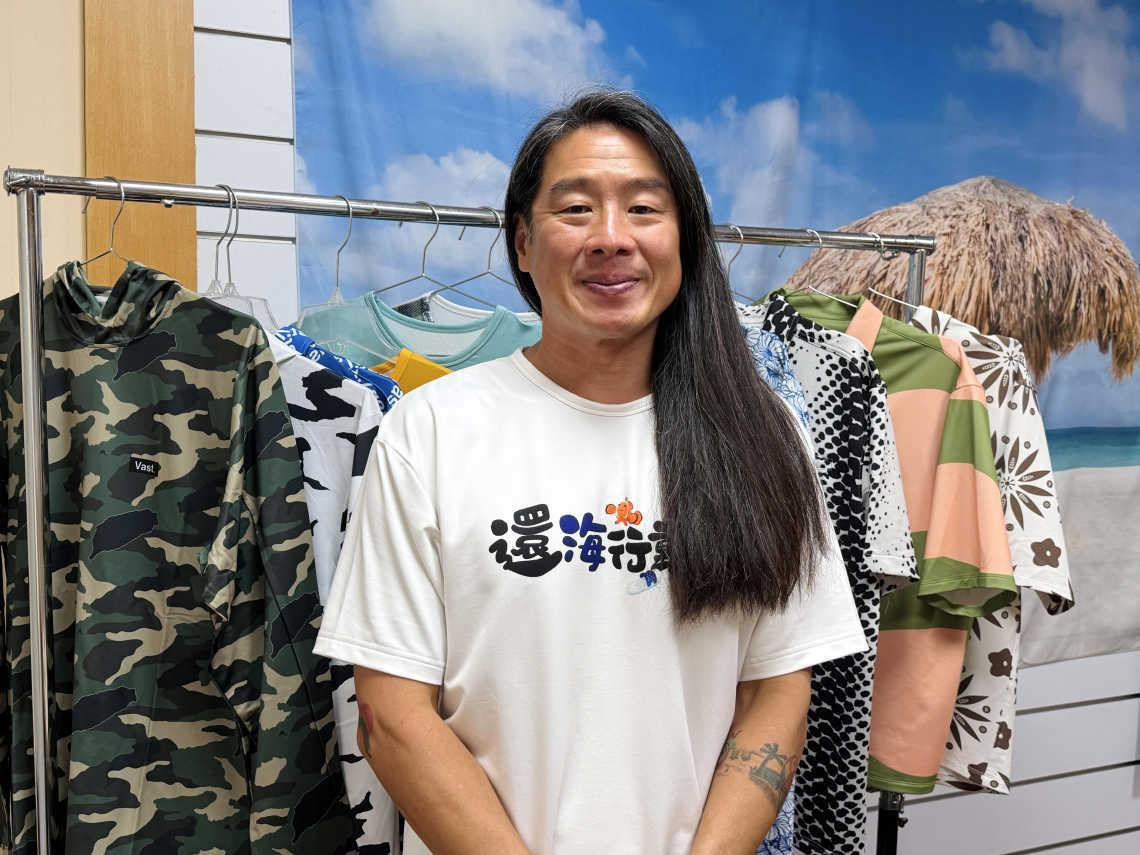
Vast Chief Operating Officer Sam Yang (楊博宇), whose background combines time spent in his family’s garment factory with a passion for surfing, introduced the company’s Aqua Terra fabric during a Business Today “Return to the Sea” event held on Earth Day, April 22.
“This garment doesn’t need to go in the washing machine, nor does it need detergent,” Yang said. He explained that after use, the clothing can be rinsed in the shower and hung to dry for reuse the following day, reducing both water consumption and the release of microplastics from washing machines.
Yang said the idea for Aqua Terra originated about a decade ago after a surfer asked whether there was a T-shirt truly suitable for surfing, noting that ordinary clothing quickly loses elasticity and retains odors after repeated exposure to seawater.
The latest generation of Aqua Terra fabric features breathability, moisture-wicking properties, quick-drying performance, and UPF 50+ sun protection for extended outdoor use.
 Sam Yang speaking at ESG event. (Business Today photo)
Yang said the material’s odor resistance comes from an exclusive antibacterial technology built into the fabric. He explained that odors in ordinary clothing are typically caused by bacteria and the tendency of sweat and environmental smells to cling to fibers.
Aqua Terra’s fabric structure reduces odor buildup, allowing garments to remain wearable after prolonged use, Yang said.
He added that fear of sun exposure and discomfort from saltwater often discourage people from entering the ocean. Yang said more comfortable clothing designed for long periods at sea could encourage people to spend more time in the water and develop greater awareness of marine conservation.
Yang said his mother discouraged him from swimming in the ocean as a child and even consulted a fortune teller, who warned he was not meant to enter the water. He said she also gave him a jade pendant to wear whenever he went surfing, per Business Today.
However, Yang said his experiences in the ocean helped shape his adventurous personality and eventually led him to focus not only on functional apparel but also on environmental sustainability in textile production.
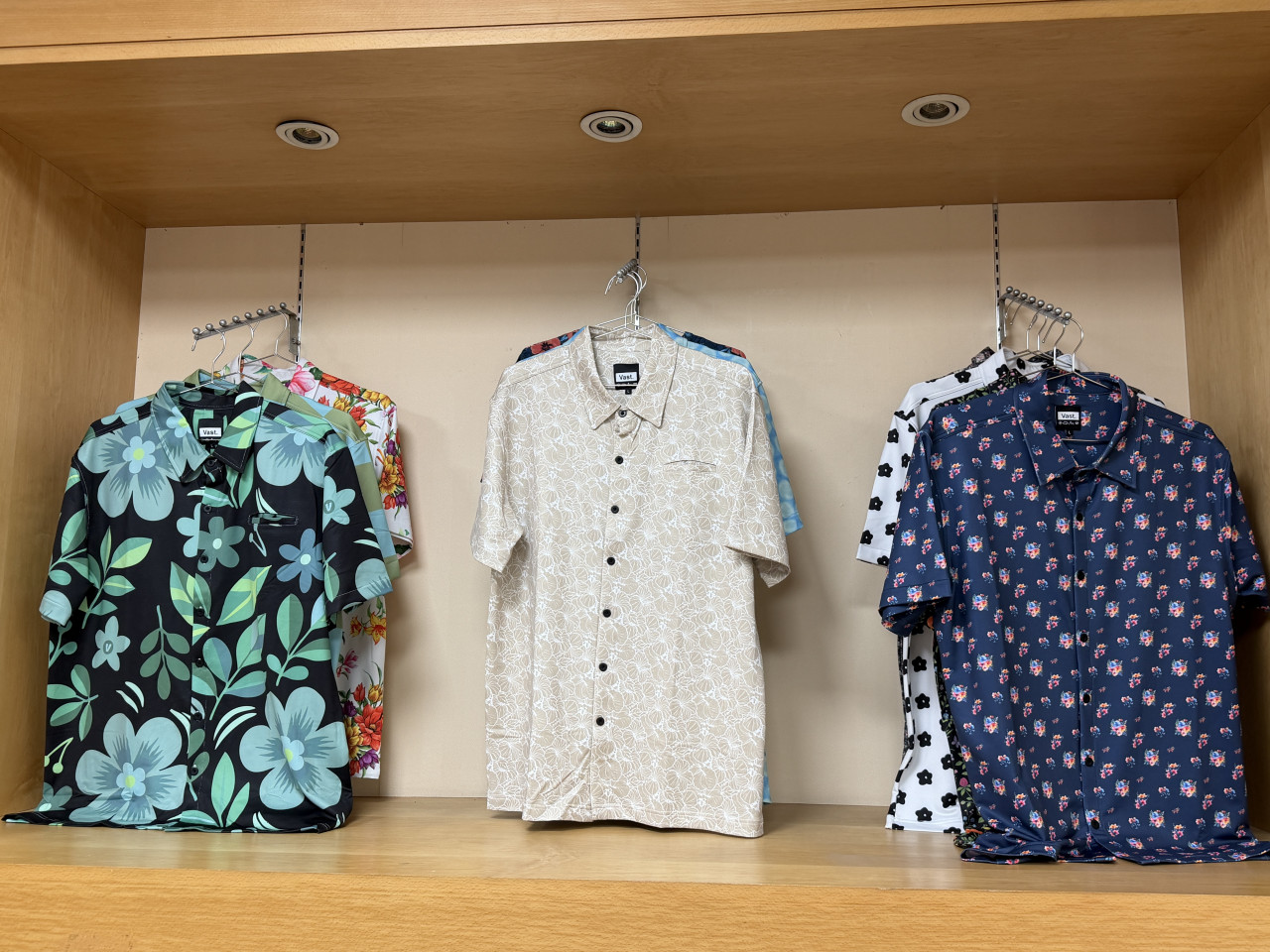 Vast apparel. (Business Today photo)
The company initially used recycled PET bottles as textile material, but Yang said the team later developed textile-to-textile recycling technology to create a closed-loop production system in which used garments can be recycled into new fabric instead of ending up in landfills.
Yang said rising global oil prices linked to geopolitical conflicts have increased the cost of polyester raw materials, gradually narrowing the price gap between virgin polyester and recycled materials.
“In the past, recycled PET fabric cost about 30% more than virgin polyester,” he said, adding that the market is beginning to recognize the commercial potential of circular textile materials.
Yang said Aqua Terra fabric could also be used by outdoor workers exposed to extreme heat, including postal workers and sanitation crews. He said the company is discussing uniform collaborations with Chunghwa Post and local sanitation departments.
“Surfing is actually a lot like starting a business,” Yang said. “The actual time spent riding waves is probably only about 5%; most of the time is spent waiting, observing, and building experience.”
Looking ahead, Yang said Vast hopes to expand beyond textile-to-textile recycling into other applications, including green building materials and energy production. “Ultimately, I hope Aqua Terra, and even the entire Vast brand, can achieve zero landfill,” he said.
※This article is reprinted from "Taiwan News." The original article can be found here.